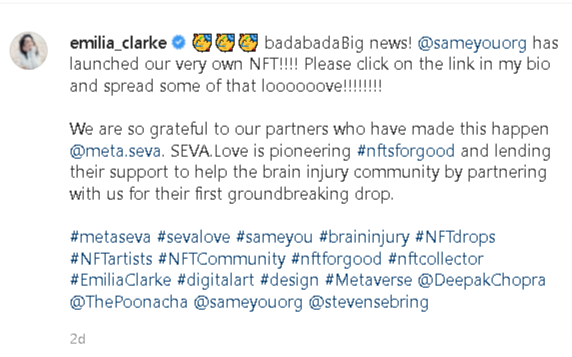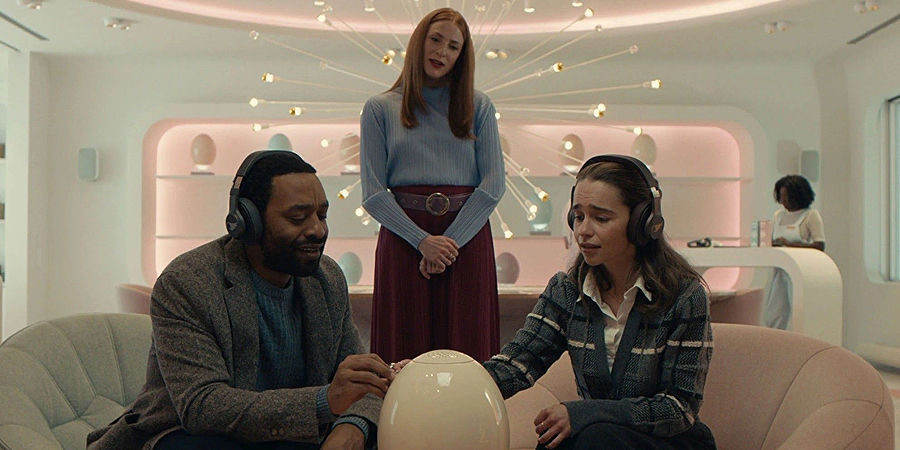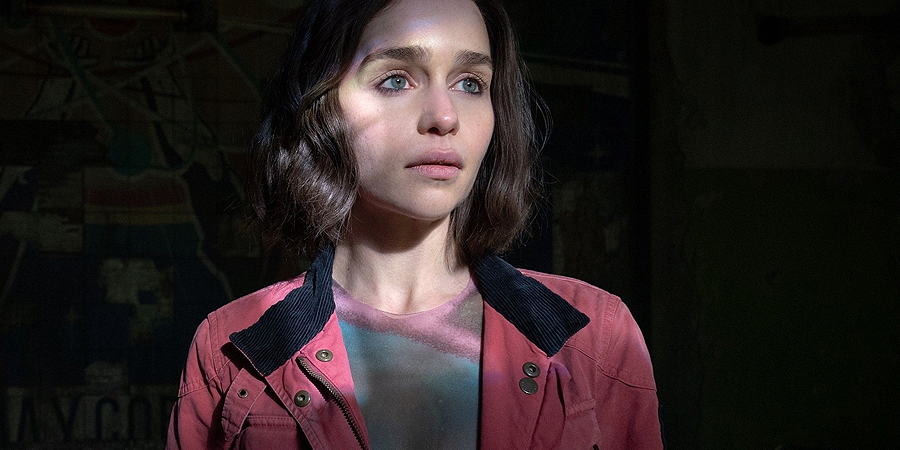
Welcome to Enchanting Emilia Clarke, a fansite decided to the actress best known as Daenerys Targaryen from Game of Thrones since 2011. She acted on stage in Breakfast at Tiffany's on Broadway, plus many movies, including Terminator Genisys, Me Before You, Solo: A Star Wars Story, and Last Christmas has some great upcoming projects. She'll be joining the MCU next year for Secret Invasions. Emilia has represented Dolce & Gabbana's and Clinque. That's not to mention being beloved by fans and celebrities internationally for her funny, quirky, humble, kind, and genuine personality. She's truly Enchanting.
June 19 2024

Around 1.3 million people in the UK are living with the effects of a long-term brain injury but there is a lack of awareness around them. Emilia Clarke aims to change that
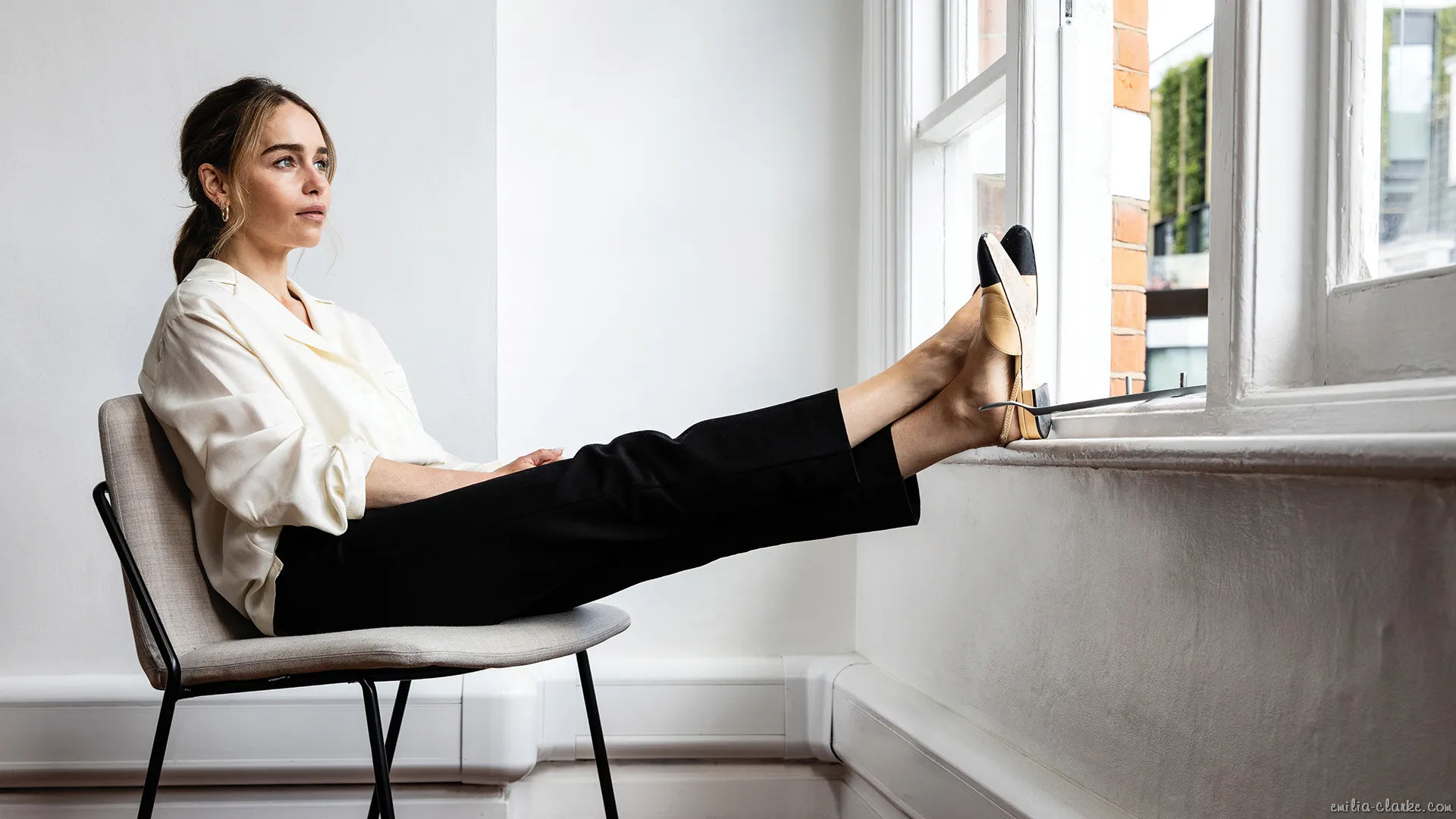



BIG ISSUE Emilia Clarke asked doctors to let her die when she had her first brain injury.

She thought she would never work again. She had aphasia which affected her speech, and if she could not speak, she could not act. If she could not act, she could not live.

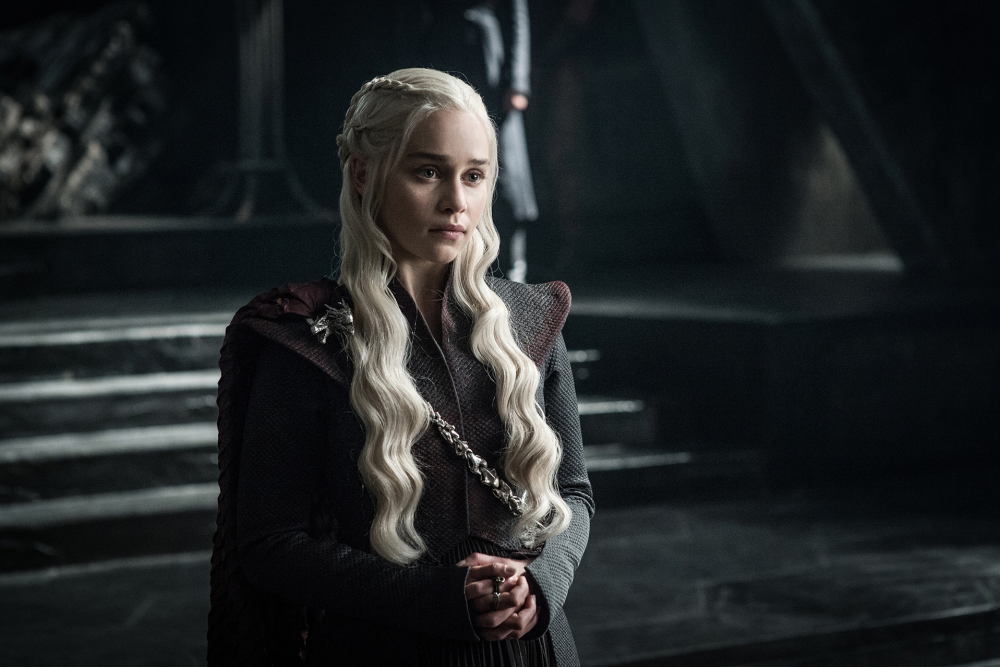
“I didn’t see any point in carrying on,” the actor admits. It was the beginning of 2011 and Clarke had just finished filming the first season of Game of Thrones, the epic fantasy series which catapulted her to fame in her 20s for her starring role as Daenerys Targaryen, Mother of Dragons.

It was the first of two brain aneurysms which almost killed her and changed her life.

We meet in her small London office with its big wide windows and light pouring into the room. Clarke has deep eye contact beneath those beautifully expressive eyebrows, and an enormous smile.

Beyond Game of Thrones, she has starred in films including Me Before You, Last Christmas and Solo: A Star Wars Story and had stints on stage. From an outsider’s view, she is living her dream and seems to adore life and the people around her.

So how does it make her feel that she wanted to give it all up?

“I get it. That was what it felt like at the time. I think if someone said to me today that I won’t be able to communicate, I would probably say the same thing. I can feel empathy for how I felt in that moment.”

Her mother Jenny, sitting beside her and quietly listening to what must be painful words from her daughter, points out that many people have wonderful lives after losing their ability to communicate through a brain injury. Clarke agrees passionately.

“My entire job is reflecting life and humanity. In that moment, I felt that if I couldn’t do that one thing that I can do, I couldn’t see a way through it.

“If that had happened, I would have overcome it and something transformative would have happened. But I’m not going to sit here and say for one minute that the first time someone hears that, they aren’t going to think: ‘What’s the point?’”

But there is a point. There is life beyond brain injury. There is hope.

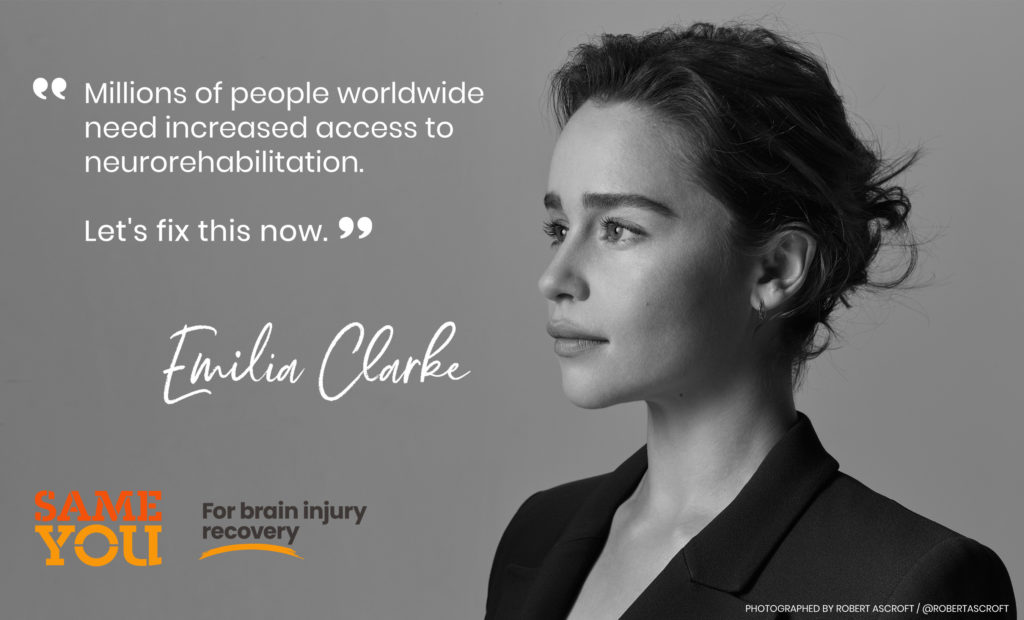
Emilia Clarke and her mother founded their charity SameYou in 2019 to develop better mental health recovery after brain injuries and advocate for change. They are now partnering with Big Issue Recruit to support survivors and their loved ones into work with the help of BIR specialist job coaches.

“Having a chronic condition that diminishes your confidence in this one thing you feel is your reason to live is so debilitating and so lonely,” Clarke, 37, recalls.

“One of the biggest things I felt with a brain injury was profoundly alone. That is what we’re trying to overcome.”
Read More

Filed under: Interviews, SameYou - 3 comments
June 10 2024

Emilia Clarke Feared She’d Get Fired From ‘Game of Thrones’ After Suffering Two Brain Aneurysms: ‘If I’m Going to Die, I Better Die on Live TV’

VARIETY Emilia Clarke is opening up about returning to “Game of Thrones” after suffering two brain aneurysms during her time as Daenerys Targaryen on the HBO show.

In a new interview with the Big Issue, Clarke said that after her first injury — which occurred in 2011, in between filming the first and second season, and required surgery — she feared that she would be dropped from the series.

“When you have a brain injury, because it alters your sense of self on such a dramatic level, all of the insecurities you have going into the workplace quadruple overnight,” Clarke said. “The first fear we all had was: ‘Oh my God, am I going to get fired? Am I going to get fired because they think I’m not capable of completing the job?’”

Another fear was that it would happen again — and this time on set. She told the Big Issue that she remembers thinking, “Well, if I’m going to die, I better die on live TV.”

Clarke did suffer another brain aneurysm in 2013, and underwent a second surgery. In an interview with the BBC’s “Sunday Morning” in 2022, she revealed that she lost “quite a bit” of her brain in the process.

“The amount of my brain that is no longer usable — it’s remarkable that I am able to speak, sometimes articulately, and live my life completely normally with absolutely no repercussions,” Clarke said. “I am in the really, really, really small minority of people that can survive that.”

As a result, Clarke has founded the charity SameYou to help other victims of brain injuries with their recovery and mental health.

“Having a chronic condition that diminishes your confidence in this one thing you feel is your reason to live is so debilitating and so lonely,” Clarke said. “One of the biggest things I felt with a brain injury was profoundly alone. That is what we’re trying to overcome.”

November 21 2021
October 02 2020

TIME – Emilia Clarke—known for displaying strength as Daenerys Targaryen and exuding warmth in movies like Last Christmas and Me Before You—is no stranger to hospitals and healthcare workers. After suffering two brain aneurysms starting in 2011, her road to recovery brought her to a deep appreciation for the care she received during her journey back to health—and to want to enable others with brain injuries to find similar resources, the actor shared in a TIME100 Talks that aired on Sept. 24.

Clarke’s own experiences have provided her with what she called an “armor of sorts” to face the pandemic. “When you personally come very close to dying—which I did twice—it brings into light a conversation which you have with yourself which goes to the tune of: appreciation for the things you have in your life, thanks for the people who are here,” she said.

SameYou, Clarke’s brain injury recovery charity, attempts to help serve that purpose. But like many other organizations this year, SameYou has felt the challenges brought on by the COVID-19 pandemic.

“People with brain injuries were leaving hospital early,” she said. “My heart was bleeding for all the people who weren’t able to get what I was able to get.” Experimenting with new virtual ways to connect with brain injury patients has presented its own silver linings, however. “COVID has paradoxically been quite an incredible moment for us to really assess that properly and see: how are the ways, during a global pandemic, can we reach out and make people not feel alone?”

Clarke also discussed the “collective grief” she thinks we are all facing, and the empathy that it might engender. “What can come out of this is the knowledge that this stuff we place so much importance on the, the things, the materialistic things, take a backseat,” she said. “When you feel bad, when you feel low, when you feel sad, when you feel scared—I think there’s a societal setup for you to grab for more to fix it, to kind of cover it. When really what you need is to strip it back and be introspective and reflective where possible. That’s the thing that’s going to last you for the rest of your life.”

While Clarke’s on-camera work has been on hold, she’s stayed active reading poetry on her social media and participating in things like a theatrical table read of a play with her friend and colleague Emma Thompson, who also wrote her TIME100 tribute in 2019, with proceeds going to charity. And when it comes to returning to showbiz, Clarke—who has been vocal about the issues she faced on the Game of Thrones set—is optimistic about how the industry has changed. “There are [now] things like intimacy coaches, which is wonderful, and something that was very far away from my experience,” she said.

Lately, she’s particularly encouraged by movements toward representative storytelling. “Whose stories are we hearing? Who are we hearing? That’s vital. Inclusivity of humanity—of everybody—there’s not enough representation,” she said. “I believe it’s coming. That’s something I care about, and the way that audiences can support that is by watching things … and giving them big box office numbers. It’s a business.”

Expanding the breadth of stories we see on screen is good for everyone, she added: “The world will be richer for it.”

Clarke’s approach right now is earnest hope. “I just keep saying the cheesiest things, but I believe in humanity, I believe in us. It’s chilling that it takes a global pandemic to make a bunch of us stop and assess and see what we have. But I’m hopeful that our healthcare workers and our frontline workers are going to be supported forever,” she said. “I’m hopeful that in the wake of Black Lives Matter and everything that’s happened around that, we will continue to see stories from everyone. I’m hopeful that when we’re not fighting a virus that doesn’t care where you come from or how much money you have, we’ll still say, ‘Oh, we’re on the same side!’”

Enchanting Emilia Clarke | Est 2012
Privacy Overview

This website uses cookies so that we can provide you with the best user experience possible. Cookie information is stored in your browser and performs functions such as recognising you when you return to our website and helping our team to understand which sections of the website you find most interesting and useful.